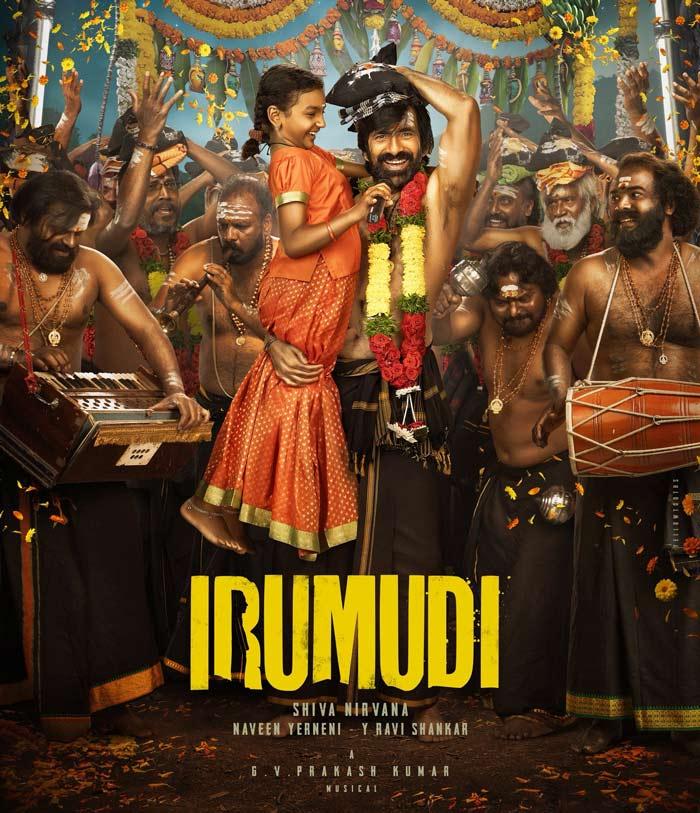
Irumudi
Ravi Teja's emotional depth, the touching father-daughter relationship and Ayyappa devotion make Irumudi a memorable family experience.
Irumudi succeeds because it gives Ravi Teja something more meaningful than another conventional mass-hero role. It allows him to play a father whose strength comes from love, responsibility and the willingness to change.
Director Shiva Nirvana builds the emotional foundation around Trinadh and his daughter. Their relationship gives the film its identity and creates a personal reason for the character's transformation.
Ravi Teja's performance is among the film's biggest strengths. His emotional scenes feel more grounded than the exaggerated heroism often associated with commercial action cinema.
The father-daughter relationship is especially effective because the emotions are easy to understand. A parent's fear, affection and desire to protect a child are universal experiences.
Baby Nakshathra brings innocence and emotional credibility to the story. Her interactions with Ravi Teja create some of the film's most touching moments.
The Ayyappa Deeksha element gives Irumudi a distinctive spiritual identity. The devotional journey is connected to personal discipline, responsibility and the possibility of becoming a better person.
Faith is most convincing in cinema when it influences a character's decisions rather than existing only as a visual symbol. Irumudi finds meaningful moments by connecting devotion with Trinadh's emotional development.
Priya Bhavani Shankar adds warmth to the family setting. Her character contributes to the emotional balance of a household dealing with difficult choices.
The supporting relationships give the film more substance than a simple father-daughter drama. They introduce different attitudes towards parenting, fear and responsibility.
Shiva Nirvana deserves appreciation for presenting Ravi Teja through a more emotionally vulnerable character. The direction gives the central relationship enough importance to carry the film.
The music and devotional atmosphere strengthen the experience. They support the emotional journey and contribute to the film's cultural identity.
The screenplay maintains interest by connecting family emotions with the larger dramatic conflict. The personal stakes make the more commercial portions easier to accept.
Some action developments and dramatic turns remain familiar. A few sequences could have benefited from tighter writing, but they do not significantly weaken the film's emotional foundation.
What makes Irumudi work is the sincerity of its central relationship. The film understands that protecting someone is not always about physical strength. Sometimes it requires patience, emotional control and personal change.
Ravi Teja's performance gives the story the maturity it needs. His quieter moments leave a stronger impression than another exaggerated heroic confrontation would have.
The devotional dimension also makes the film distinctive. It connects personal struggle with faith without allowing the spiritual setting to completely replace the human story.
Irumudi is a rewarding family entertainer with a strong emotional centre. Its familiar commercial elements are secondary to the sincerity of its performances and relationships.
Hmm... A father's love, a journey of faith, and Ravi Teja at his emotional best. A genuinely enjoyable experience.
Ravi Teja's emotional performance, Baby Nakshathra, the father-daughter relationship, Ayyappa Deeksha, devotional atmosphere, music and family emotions.
A few familiar commercial elements and predictable dramatic moments.
AI-generated review? Nope. I watch. I think. I judge. I rate. Technology just makes sure my English survives the journey from my head to your screen. The “hmm” is completely mine. 🤔
What did you think?
Your movie. Your reaction.