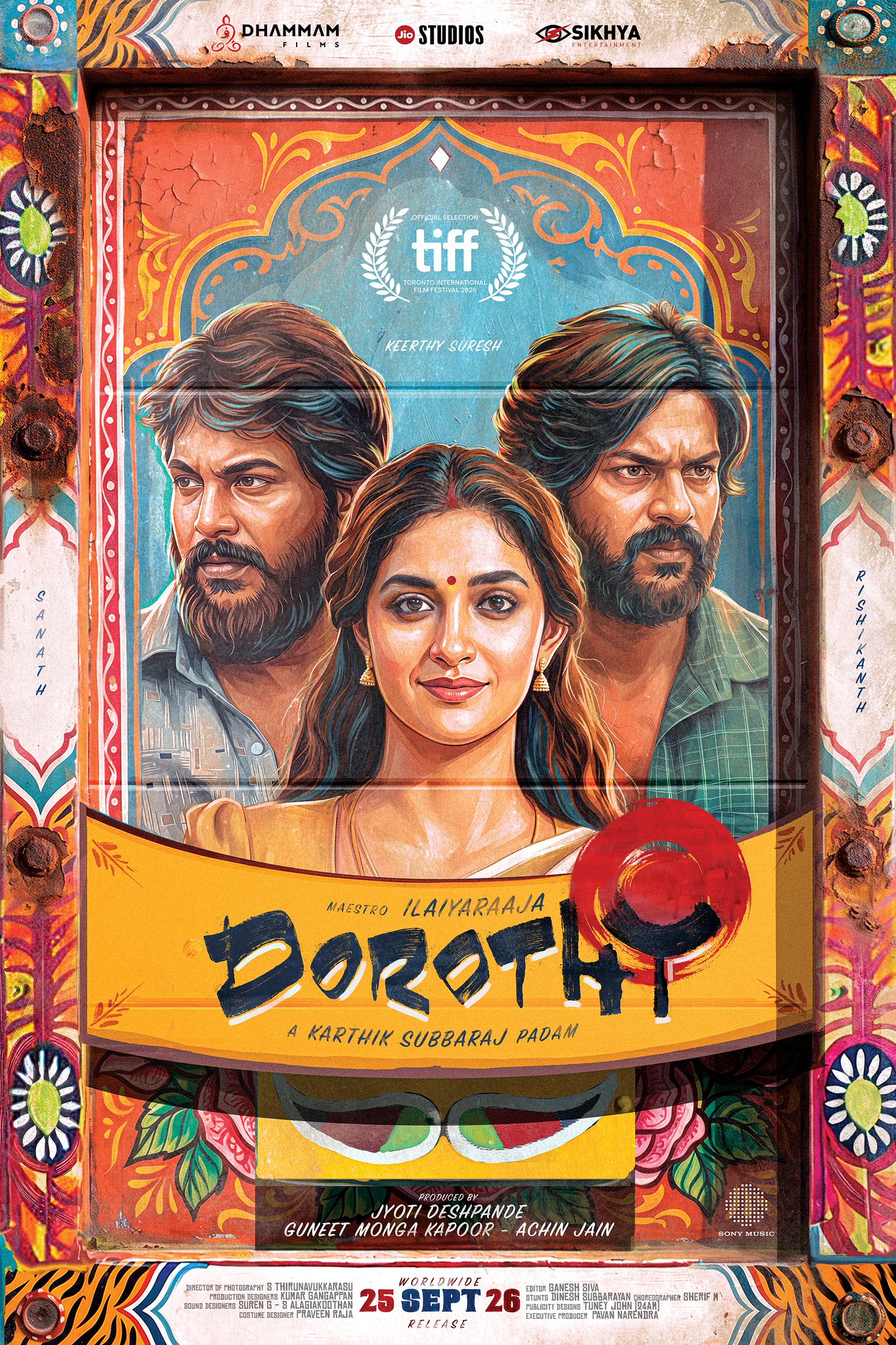
Dorothy
Dorothy asks a disturbing question: how many lives must be sacrificed before a family realizes that honour without humanity is only fear wearing pride?
The most interesting thing about Dorothy is that its violence does not begin with a weapon. It begins with a word: honour.
In some families, honour means dignity. Here it slowly becomes surveillance: what will the village say, what will the caste say, what will the family say, what happens to our name? Eventually the person living inside that family becomes less important than the family's idea of itself.
That is where Karthik Subbaraj's film hits hardest. Dorothy is not simply talking about honour killing as a crime. It examines the thinking that makes somebody believe another person's life can reduce their family's social standing.
Childhood is crucial to that argument. Children watch who is allowed to love whom, whose slippers stop at which doorway, and how adults behave when caste, gender and reputation enter a conversation. Then those children become adults carrying fears they did not invent themselves.
Sananth gives the film its soul. His Subbu is effective not simply because the role is bold, but because the performance lets us see the vulnerable person underneath everything society is trying to name, shame, correct or erase.
Rishikanth is somebody I would watch again. There are moments where his face carries conflict without immediately explaining it. If he develops greater internal variation, particularly the ability to communicate thought before dialogue, he has genuine leading-man potential.
My biggest issue is Karthi's movement from friendship toward romantic love. I understand and accept the destination. I am less convinced by the distance travelled to reach it.
The friendship is established strongly, but I wanted more intermediate emotional moments: a silence that suddenly feels different, jealousy he does not understand, physical closeness that unsettles him, or an instinct to protect Subbu that he slowly recognizes as something beyond friendship.
The destination is convincing. The road needed another kilometre.
Keerthy Suresh does not need to dominate the runtime for Dorothy to matter. Her compassion creates consequences larger than her physical presence in the story. Keerthy plays that warmth without turning goodness into performance.
Ilaiyaraaja's music is another major strength. Some music accompanies nostalgia. Ilaiyaraaja can create memory for something we watched five minutes ago. His score feels as though it already existed somewhere in this village before the camera arrived.
The rustic Tamil world also matters. The language is rough. People swear. Men behave badly. Caste does not arrive wearing explanatory subtitles. The village does not feel like a sanitized urban memory of rural life.
Karthik Subbaraj occasionally weakens his own argument by explaining something the image or performance has already communicated. With material this powerful, restraint could sometimes make the politics louder.
I like what the ending wants, but I wanted one more ripple beyond the two people at its centre. Honour culture is larger than one relationship. Do the elders change? Does nothing change? Does the next generation simply walk away?
The film does not owe us a social-reform instruction manual. But that unanswered question matters because two people can escape a system without defeating it.
Dorothy is not important because everybody will agree with it. It is important because some people may become uncomfortable for exactly the reason the film exists. Cinema does not always have to change somebody's mind inside the theatre. Sometimes it only has to put one question inside their head and make sure it travels home with them.
Sananth, Rishikanth, Keerthy Suresh, Ilaiyaraaja's music, the rustic Madurai world, strong dialogue and the courage to confront caste, honour, masculinity and gender without sanitizing them.
Karthi's transition from friendship to romantic love needed more intermediate emotional bonding, some ideas are over-explained, and the ending could have shown one more consequence beyond the couple.
AI-generated review? Nope. I watch. I think. I judge. I rate. Technology just makes sure my English survives the journey from my head to your screen. The “hmm” is completely mine. 🤔
What did you think?
Your movie. Your reaction.