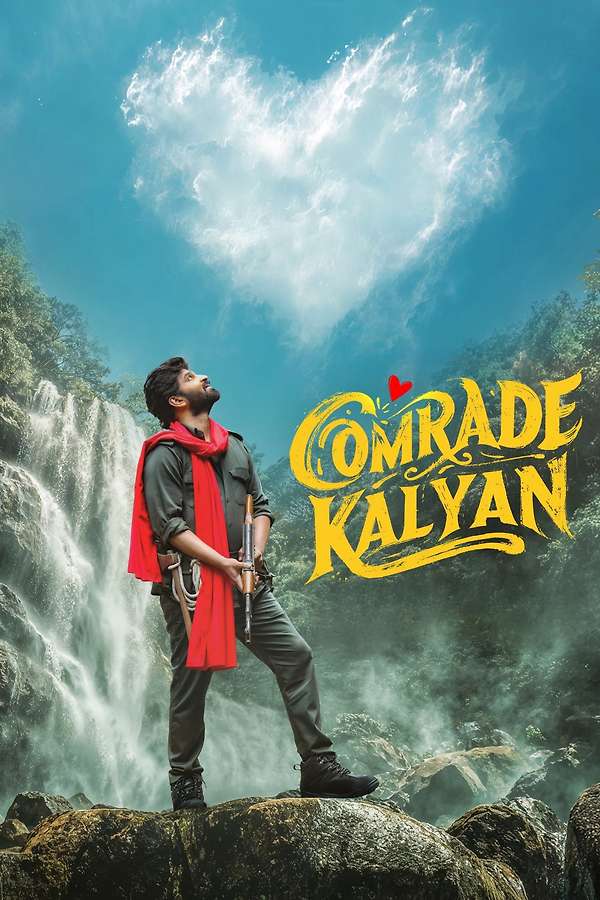
Comrade Kalyan
Sathya finds the laughs, Sree Vishnu needs more expressive range, and an interesting Naxalite backdrop loses its weight to convenient twists.
Comrade Kalyan begins with an interesting world. The 1990s village atmosphere, cinema-theatre setting, forests and Naxalite presence offer something different from a routine Telugu comedy. Director Janakiram Marella has chosen a promising backdrop, but the people inside it do not always behave convincingly.
My biggest problem is the treatment of Naxalism. A movement associated with ideology, sacrifice, violence and decades of conflict becomes a convenient route for solving an ordinary personal problem. Comedy around such a subject is perfectly possible, but the motivations need greater weight.
The screenplay makes Kalyan's entry into this dangerous world surprisingly easy. Several developments appear designed around the hero's convenience rather than emerging naturally from the circumstances.
Sree Vishnu has a natural ease with comedy. His casual dialogue delivery can make ordinary exchanges entertaining. But I feel he needs greater variation in his facial expressions and emotional reactions.
Comedy is not only about delivering a punchline. An uncomfortable pause, a confused expression or a sudden change in confidence can sometimes create more laughter than dialogue. Kalyan should look and react differently when frightened, pretending to be brave, confused or emotionally affected.
Sree Vishnu has the screen presence and dialogue timing. What I want to see is more expressive control between the joke and the emotion underneath it. That could take his performances to another level.
Sathya's Dubai Babu is among the more enjoyable parts of the film. His hesitation, delivery and reactions can turn simple exchanges into funny moments. His combination scenes with Sree Vishnu benefit from their contrasting comic styles.
But even Sathya cannot rescue every scene. When the writing repeats the same kind of confusion, comic timing alone is not enough. A good comedian can improve a weak joke, but not every weak situation.
The leadership character associated with Sai Chand is another disappointment. A Naxalite leader should carry conviction, even when his beliefs or decisions are questionable. The eventual motivation feels too small for the authority and seriousness attached to the role.
A leader can have selfish motives or betray an ideology. Such contradictions can make powerful drama. But the film does not explore the transformation deeply enough. The explanation seems more useful to the screenplay than meaningful to the character.
The Odisha-related romantic and comic portions have some light moments, but become repetitive. Mahima Nambiar's Sitara could have been developed beyond her function in Kalyan's complications. Her background provides an opportunity for stronger relationship writing.
The screenplay by Kona Venkat creates curiosity, but too many answers are saved for the final stretch. A clever twist changes our understanding of earlier scenes. A convenient twist merely supplies information that should have been established through character behaviour.
The second half increasingly depends on such conveniences. The Naxalite situations, police involvement and minister-related comedy need stronger cause and effect. The final explanations cannot completely repair the missing logic.
Sai Sriram's cinematography is a strength. The village and forest surroundings establish a convincing atmosphere. Vijay Bulganin's music supports portions of the film, although the background score does not consistently elevate the tension.
Despite these problems, the film remains watchable. Sathya delivers enjoyable comedy, Sree Vishnu brings an easy screen presence, and certain stretches of the screenplay maintain interest.
Comrade Kalyan has enough atmosphere and comedy to entertain in portions, but not enough conviction in its writing to make the central idea memorable. The director had an interesting world. He did not need so many convenient twists to make it entertaining.
Sathya's comic timing, Sree Vishnu's easy dialogue delivery, rural atmosphere, Sai Sriram's cinematography and intermittent screenplay curiosity.
Simplified treatment of Naxalism, limited emotional variation in the lead performance, underdeveloped leadership character, repetitive Odisha comedy and convenience-driven twists.
AI-generated review? Nope. I watch. I think. I judge. I rate. Technology just makes sure my English survives the journey from my head to your screen. The “hmm” is completely mine. 🤔
What did you think?
Your movie. Your reaction.